TL;DR:
- The six main kitchen layouts are designed to fit different space sizes and cooking needs. Choosing the right layout depends on room dimensions, household size, and how you cook. Proper aisle width and task zones improve efficiency and flow in any design.
Kitchen layout types are the foundational design choices that define your kitchen’s efficiency, workflow, and social character. Six primary layouts dominate residential design in 2026: single-wall, galley, L-shaped, U-shaped, G-shaped, and island. Room sizes for these layouts range from roughly 80 square feet for a single-wall setup to 200 or more square feet for a large island configuration. The right choice depends on how much space you have, how you cook, and how your kitchen connects to the rest of your home.
1. What are the six primary kitchen layout types?
The six core kitchen floor plan ideas each solve a different spatial problem. Understanding their strengths and limits before you renovate saves you from costly redesigns later.
- Single-wall: All appliances and cabinets line one wall. Best for studios and compact apartments under 100 square feet. Storage is limited, but the layout keeps costs low and the room open.
- Galley: Two parallel counters face each other with a corridor between them. The galley is the most efficient layout for a single cook because it minimizes walking distance between the sink, stove, and refrigerator.
- L-shaped: Counters run along two adjacent walls, forming an L. This layout is versatile, fits medium-sized rooms, and maintains social interaction because it does not box in the cook.
- U-shaped: Three walls of cabinetry and counters wrap around the cook. This layout delivers maximum storage and prep space, making it the top pick for avid home cooks.
- G-shaped: The G-shaped kitchen adds a partial fourth wall to the U-shaped plan, creating an extra peninsula for storage and work zones. It suits large kitchens with high storage demands.
- Island: A freestanding counter sits in the center of an open-plan kitchen. Islands increase prep space and add a social function, but they require sufficient clearance on all sides to keep traffic flowing.
Pro Tip: Sketch your room dimensions before committing to any layout. A U-shaped plan that looks great in a magazine can feel like a closet in a 120-square-foot kitchen.
2. How do kitchen layout types compare in efficiency and space?
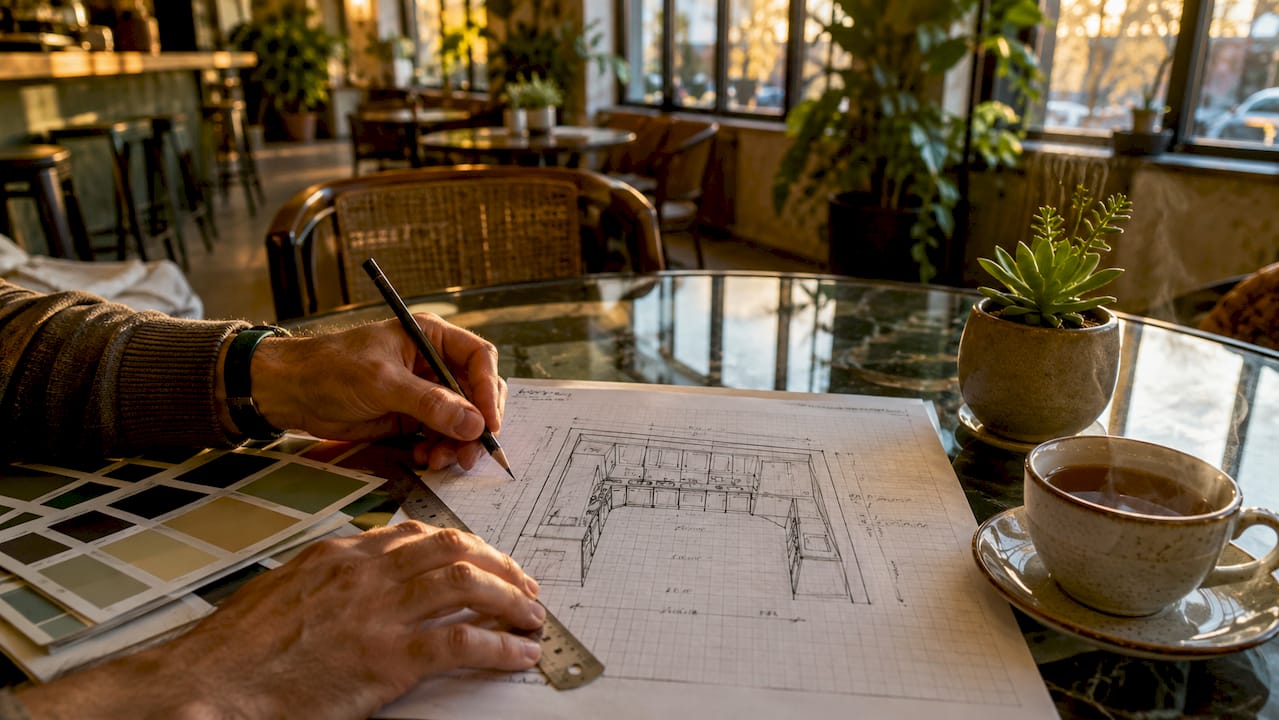
Choosing between popular kitchen designs comes down to three factors: minimum room size, counter space, and how well the layout handles multiple people at once.
| Layout | Min. room size | Counter space | Best for |
|---|---|---|---|
| Single-wall | ~80 sq ft | Low | Studios, tiny apartments |
| Galley | ~100 sq ft | Medium | Single cooks, narrow rooms |
| L-shaped | ~120 sq ft | Medium-high | Families, open-plan homes |
| U-shaped | ~150 sq ft | High | Avid cooks, larger kitchens |
| G-shaped | ~175 sq ft | Very high | Large kitchens, multi-cook households |
| Island | ~200 sq ft | High + island | Open-concept kitchen, entertainers |
Aisle width is the most overlooked number in kitchen planning. A minimum of 42 inches is recommended for single-cook kitchens, while 48 inches or more is the standard when multiple people cook around an island. That extra six inches is the difference between a functional kitchen and a frustrating one.
Modern kitchen design has also moved away from the classic “work triangle” concept. Work zone planning now outperforms the triangle in multi-cook households by grouping tasks, such as prep, cooking, and cleanup, into dedicated zones rather than forcing a triangular path between three points.
3. Which layout suits your household size and cooking habits?
No universal best layout exists for all households. Suitability depends entirely on your physical space and how you actually use your kitchen. Here is how to match your lifestyle to the right option.
For single cooks or couples:
- The galley layout wins on pure efficiency. Every step counts when you cook alone, and the galley keeps the sink, stove, and refrigerator within a tight corridor.
- A single-wall layout works if the room is small and you rarely cook elaborate meals.
- L-shaped kitchens are a strong middle ground. They give you more counter space than a galley without requiring a large room.
For families and multi-cook households:
- U-shaped and G-shaped kitchens give multiple cooks room to work without colliding. The extra counter runs mean two people can prep and cook simultaneously.
- An island layout in an open-concept kitchen lets one person cook while others sit, eat, or help. This setup is the most social of all kitchen layout options.
- Adding an island or peninsula to an existing L-shaped or U-shaped kitchen is a practical upgrade that adds seating and workflow without a full gut renovation.
For frequent entertainers:
- Open-concept kitchen designs with an island are the clear choice. The island acts as a natural gathering point, keeping guests close without putting them in the cook’s way.
- The L-shaped layout is a practical alternative when a double island is not feasible. It maintains good flow and keeps the cook visible and connected to the room.
The honest truth is that most homeowners choose a layout based on what they see in photos rather than how they actually cook. Map your daily habits first. If you make coffee and toast every morning but rarely cook full dinners, a single-wall or galley layout serves you better than an oversized U-shaped kitchen you will never fully use.
4. What design tips optimize layouts for small or irregular spaces?
Small kitchens demand smarter decisions, not bigger budgets. The right efficient kitchen arrangement in a compact room outperforms a poorly planned large kitchen every time.
Choose layouts that minimize corners. Small kitchens benefit most from layouts that avoid blind corners, since blind-corner cabinets are expensive to install and awkward to use. Galley and single-wall layouts eliminate corners entirely. L-shaped layouts create one corner, which is manageable with a lazy Susan or pull-out drawer system.
Avoid the U-shaped trap in small rooms. Blind-corner cabinets are common in U-shaped kitchens and should be optimized or avoided when working with a tight budget or limited square footage. A U-shaped plan in a room under 150 square feet will feel cramped and waste money on corner hardware.
Use a peninsula instead of a full island. A peninsula attaches to one wall or counter run, so it requires clearance on only three sides instead of four. This gives you the extra prep surface and seating of an island without the footprint.
Check appliance door clearance before finalizing any plan. The benchmark for a well-planned kitchen is simultaneous door clearance: your dishwasher and oven doors should open fully at the same time without blocking the aisle or each other. This test catches layout problems that look fine on paper but fail in real use.
For guidance on how layout choices affect your total renovation budget, the NYC kitchen remodeling cost guide breaks down costs by layout complexity and room size.
Pro Tip: Tape out your proposed layout on the floor with painter’s tape before ordering a single cabinet. Walk through it, open imaginary doors, and cook an imaginary meal. You will catch problems in ten minutes that would cost thousands to fix later.
For compact or unconventional spaces, residential construction planning also covers how early layout decisions affect structural and mechanical costs down the line.
Key takeaways
The best kitchen layout matches your room size, cooking habits, and social priorities rather than following a trend.
| Point | Details |
|---|---|
| Six layouts cover all needs | Single-wall, galley, L-shaped, U-shaped, G-shaped, and island address every room size and lifestyle. |
| Aisle width is non-negotiable | Keep aisles at 42 inches minimum for one cook; 48 inches or more for multiple cooks. |
| No layout fits everyone | Match the layout to your actual cooking habits, not to what looks good in a showroom. |
| Small kitchens need fewer corners | Galley and single-wall layouts avoid blind corners and keep costs and clutter down. |
| Work zones beat the work triangle | Grouping tasks by zone improves efficiency in multi-cook households more than the classic triangle rule. |
Why I always ask clients how they actually cook before touching a floor plan
Most homeowners come to me with a layout already in mind. They saw it on a renovation blog or in a friend’s apartment, and they want it. My job is to slow that down.
The single biggest mistake I see is choosing a layout for its looks rather than its function. A G-shaped kitchen looks impressive in a showroom. In a 160-square-foot New York City kitchen, it turns into a maze. I have seen clients spend significant money on cabinetry only to realize they cannot open the oven and dishwasher at the same time without one door hitting the other.
What I tell every client: spend one week writing down every time you enter your kitchen and what you do there. Most people use three feet of counter space for 90% of their cooking. That data changes everything about which layout actually serves them.
The other thing I push back on is the obsession with open-concept kitchen designs. An open plan is social and beautiful, but it also means cooking smells, noise, and mess travel freely through your living space. For some households that is a feature. For others, it is a problem they discover after the wall is already gone.
The right layout is the one that fits your life, not the one that photographs well. Measure your room, map your habits, and then choose. The kitchen layout examples that hold up over time are always the ones built around real behavior, not aspirational cooking.
— Grzegorz
How Agny helps you get the kitchen layout right
Choosing the right layout is only the first step. Executing it well, within your budget and timeline, is where most renovations succeed or fall short.

Agny specializes in kitchen renovations across New York City, working with homeowners to translate layout decisions into finished spaces that add real, lasting value. Whether you are converting a galley kitchen in a Manhattan apartment or building out a full island layout in a Brooklyn brownstone, the team at Agny handles design coordination, millwork, and construction from start to finish. Explore how kitchen renovations add real value to your home, or reach out to Agny directly to discuss your project and get a plan built around your specific space.
FAQ
What are the most popular kitchen layout types?
The six most common residential kitchen layouts are single-wall, galley, L-shaped, U-shaped, G-shaped, and island. L-shaped and island layouts are the most popular choices for open-plan homes in 2026.
Which kitchen layout is the most efficient?
The galley layout is the most efficient for a single cook because it minimizes the distance between the sink, stove, and refrigerator. For multi-cook households, a U-shaped or island layout with 48-inch aisles performs better.
How much space do I need for an island kitchen?
An island kitchen typically requires 200 or more square feet to maintain proper clearance on all sides of the island. Islands need at least 42–48 inches of aisle space around them to keep traffic and workflow unobstructed.
Is an open-concept kitchen right for every home?
An open-concept kitchen works best for households that entertain frequently and prioritize social flow over cooking privacy. Homes where cooking smells, noise, or mess would disrupt living areas may benefit more from a semi-enclosed L-shaped or U-shaped layout.
What is the best kitchen layout for a small apartment?
Galley and single-wall layouts work best in small apartments because they eliminate costly blind corners and keep the floor plan open. Both layouts fit rooms as small as 80–100 square feet without sacrificing core functionality.